
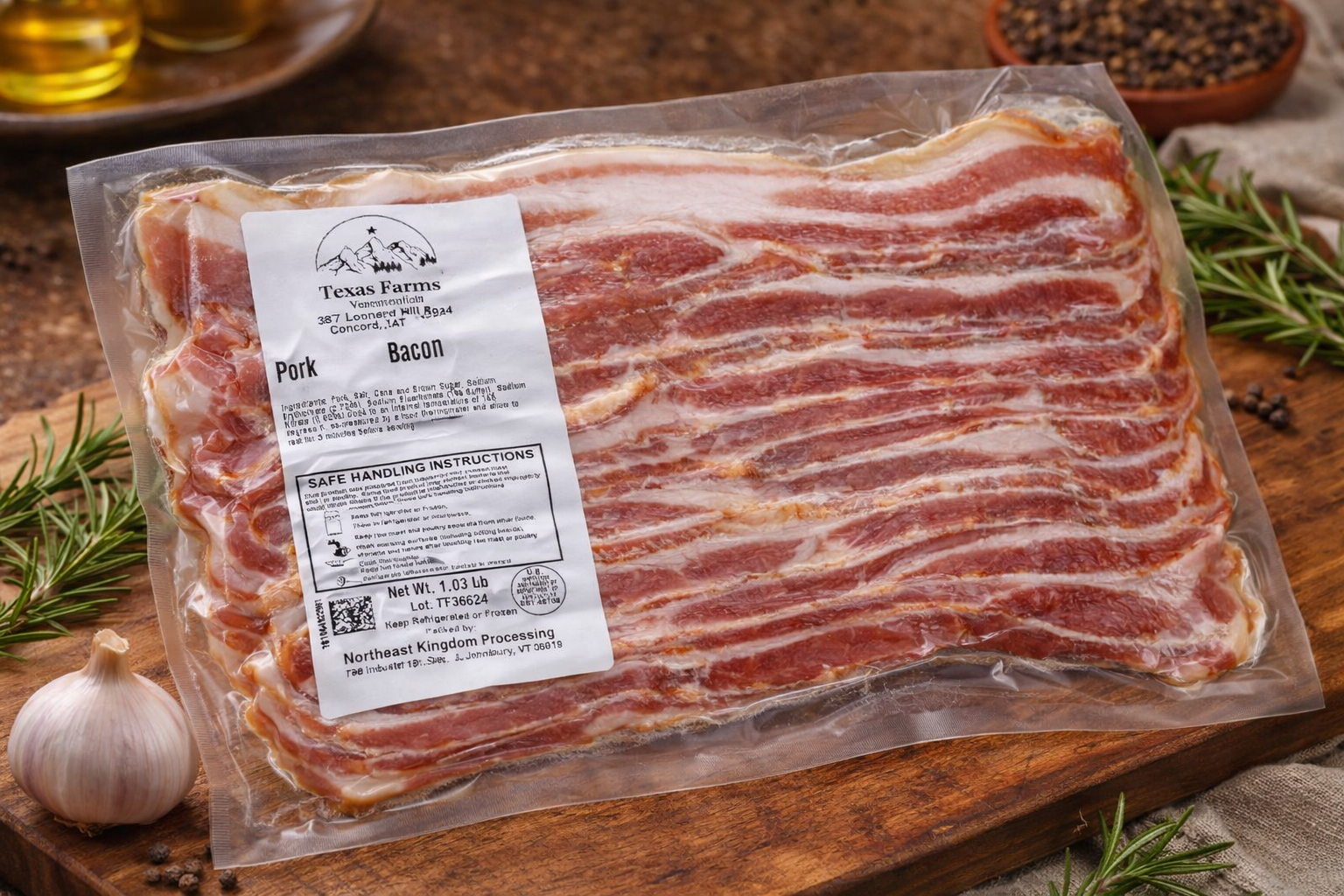
If the only bacon you’ve ever cooked came from a supermarket, the first time you cook heritage bacon you might be a little surprised.
The fat is different. The cook time is different. The way it browns, crisps, and renders is different. Get it right and you’ll never go back. Get it wrong and you’ll wonder what the fuss is about.
Here’s what we’ve learned.
Start Cold
The single most important rule: put your bacon in a cold pan.
Most recipes tell you to heat the pan first, then add the meat. With heritage bacon, that’s exactly backwards. Heritage pork has more fat than commercial pork, and that fat needs time to render slowly. Putting cold bacon in a hot pan sears the outside before the fat has a chance to melt out, leaving you with chewy strips that are crispy on the surface but rubbery underneath.
Start cold. Let the bacon and pan heat up together over medium-low. The fat will start to liquefy. The strips will lay flat. By the time the pan is properly hot, half the rendering has already happened.
Go Lower and Slower Than You Think
Commercial bacon is engineered to cook fast. Heritage bacon is not.
Medium-low heat is your friend. The fat needs time to render properly, and the meat needs time to develop flavor. Crank the heat and you’ll get the outside dark before the inside has finished cooking.
A heritage bacon strip might take 8–10 minutes per side at medium-low. That seems like forever if you’re used to flash-cooking thin supermarket strips, but the results are worth it.
Save the Fat
When the bacon is done, drain it onto paper towels and pour the rendered fat into a glass jar. Keep it in the fridge.
This fat is liquid gold. Heritage pork fat is creamy, flavorful, and stable at room temperature once cooled. We use it for:
- Frying eggs — try this once, you’ll never go back to butter for breakfast
- Cooking greens — wilted kale or chard in bacon fat is one of the great simple side dishes
- Roasting potatoes — toss cubed potatoes in a tablespoon of bacon fat before roasting
- Searing other meats — chicken, pork chops, even fish all benefit from a bacon-fat sear
- Vinaigrettes — warm bacon-fat dressings over bitter greens are a thing of beauty
One pound of our bacon will easily produce 1/4 cup or more of usable fat. Don’t waste it.
Don’t Crowd the Pan
Heritage bacon strips are thicker than commercial strips. Give them room. If you crowd the pan, the strips steam each other instead of frying, and you’ll never get the crispy edges you’re after.
Cook in batches if you need to. The first batch will cook in fat from the second, and so on. It takes a little longer but the results are dramatically better.
The BLT Test
The best way to taste the difference between heritage bacon and commercial bacon is in a BLT.
Toasted sourdough. Mayonnaise (good mayonnaise, please). A ripe summer tomato. Crisp lettuce. And three thick slices of heritage bacon, still warm from the pan.
The fat carries flavor that commercial bacon simply doesn’t have. The meat has texture and depth. The whole sandwich tastes more like itself.
If you ever wonder why heritage pork costs more, eat a BLT made with both kinds back to back. You’ll have your answer.
A Note on Storage
Our bacon is dry-cured, which means it keeps better than commercial bacon — but it’s still meant to be eaten fresh. Keep it in the fridge for up to a week after opening, or freeze whatever you won’t use right away.
To freeze, separate strips with parchment paper so you can pull off as much as you need without thawing the whole pound.
The Whole Point
There’s a reason farm-to-table chefs and serious home cooks seek out heritage bacon. It’s not nostalgia. It’s that the bacon is genuinely, measurably better — and once you know how to cook it, the difference becomes obvious in every bite.