
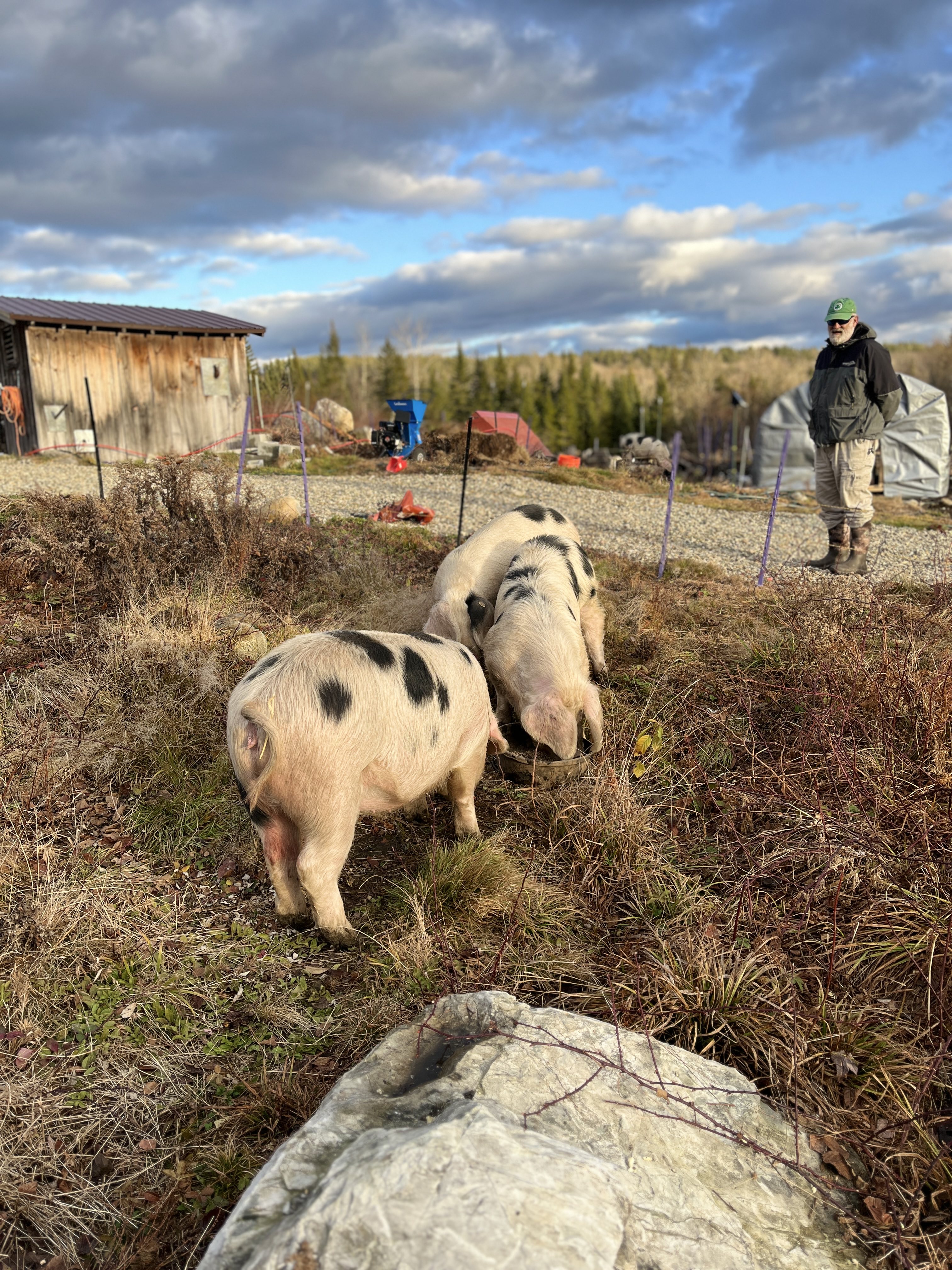
If you’ve only ever eaten pork from the supermarket, you might think pork is pork. But once you taste heritage pork from a breed like our Gloucestershire Old Spots, you’ll understand why chefs and home cooks are seeking out these traditional breeds.
The Problem with Commercial Pork
Modern commercial pigs have been bred for one thing: efficiency. They grow fast, produce lean meat, and can be raised in confinement. The result? Pale, watery pork that needs to be brined, injected, or heavily seasoned to have any flavor at all.
The industry calls this “the other white meat” — and that marketing slogan tells you everything you need to know. They bred the flavor right out of the pig.
What Makes Heritage Pork Different
Heritage breeds like our Gloucestershire Old Spots were developed over centuries for flavor, not factory efficiency. Here’s what sets them apart:
Marbling
Heritage pigs have intramuscular fat — the white streaks running through the meat that keep it moist and flavorful during cooking. Commercial breeds have had this bred out of them in the quest for “lean” pork.
Slower Growth
Our pigs take 8-10 months to reach market weight. Commercial pigs are pushed to slaughter in 5-6 months. That extra time means more developed muscle, more complex flavor, and better texture.
Diet and Exercise
Pasture-raised pigs forage, root, and move around. They eat grass, roots, fallen fruit, and supplemental feed. This varied diet and natural movement creates meat with depth and character.
Genetics
Gloucestershire Old Spots have genetics going back to the 1800s. They were bred by English farmers who cared about taste, not by corporations optimizing for profit margins.
The Taste Test
The difference is obvious from the moment you open the package. Heritage pork is darker — a deep rose color rather than pale pink. It smells like pork should smell.
Cook a heritage pork chop simply — salt, pepper, cast iron, butter — and you’ll taste pork the way your great-grandparents knew it. Rich, savory, with fat that renders into something delicious rather than rubbery.
Is It Worth the Price?
Heritage pork costs more than supermarket pork. Our whole hogs run $6-8 per pound hanging weight, while you can find commercial pork for $2-3 per pound.
But consider: you’re paying for an animal that lived a good life on pasture. You’re supporting a small farm rather than a factory operation. You’re getting meat with actual flavor that doesn’t need to be drowned in sauce.
And honestly? When the pork actually tastes like something, you tend to eat less of it. A single well-raised chop is more satisfying than a pound of bland commodity pork.
Try It Yourself
We raise Gloucestershire Old Spots on pasture here at Texas Farms Vermont. If you’re in the Northeast Kingdom or surrounding areas, we’d love to get some real pork on your table.
Check out our GOS Pigs page to learn more about the breed, or visit our shop for individual cuts.
Have questions about heritage pork? Get in touch — we love talking about our pigs.