In March, the snow is still on the ground in Concord. The pigs are bundled into their winter shelters. The pasture is months from green.
But step into our greenhouse and it’s spring.
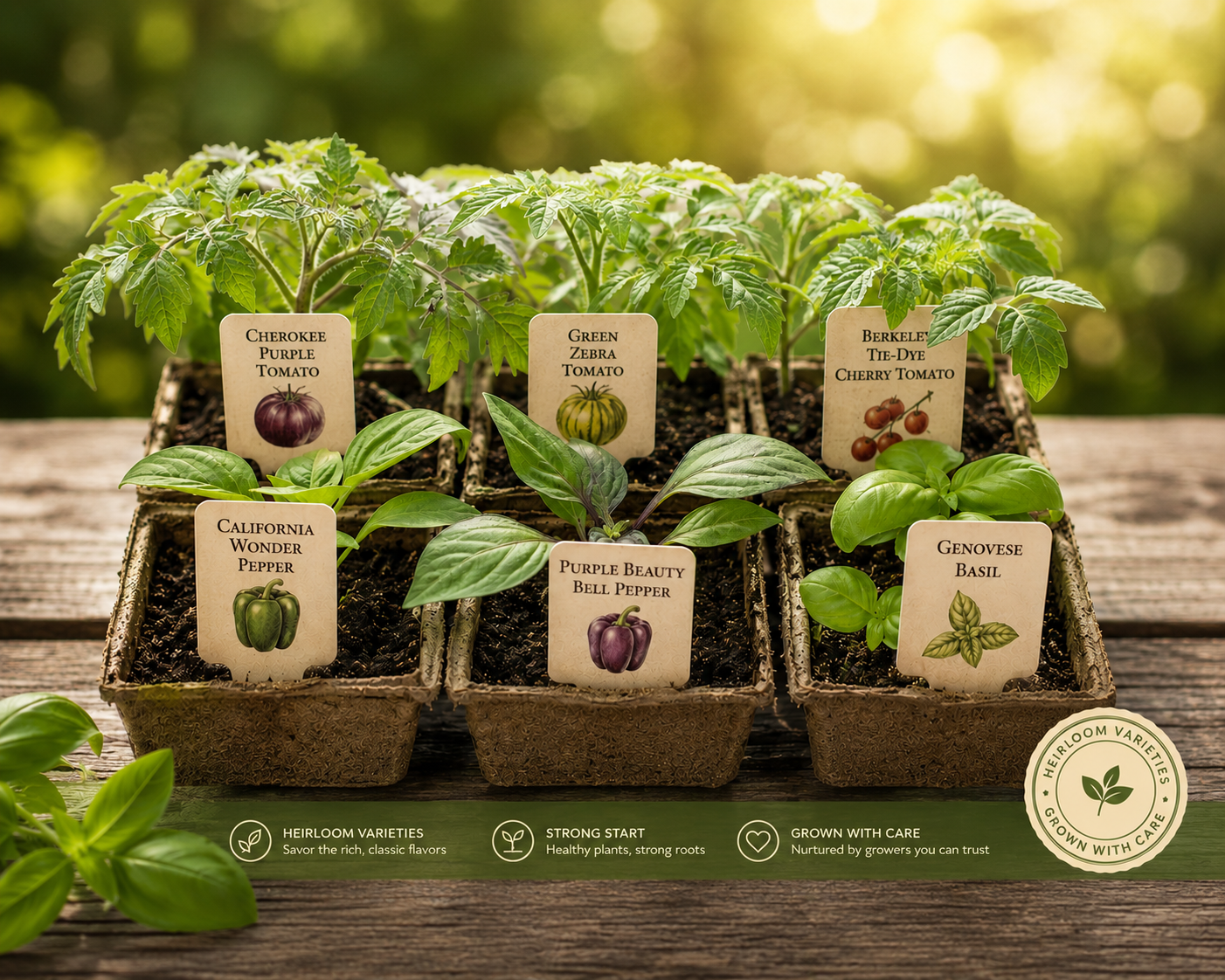
Trays of tiny seedlings — tomatoes, peppers, basil, zinnias, kale — stretch from one end to the other. Some have just pushed up their first true leaves. Others are already six inches tall, getting ready to be potted up. The whole space smells like wet soil and growing things.
This is where every plant start we sell begins.
Why Heirloom
We grow almost exclusively heirloom varieties, and the reason is simple: flavor.
Commercial seed companies have spent decades breeding vegetables for the wrong things. Uniform size. Shelf life. Resistance to bruising during shipping. The result is the pale, watery tomato you find in a supermarket in January — the one that tastes like cardboard.
Heirloom varieties were bred over generations for completely different things. How they taste. How they grow in real gardens. How they perform in specific climates and conditions. Brandywine tomatoes have been passed down for over a century not because they ship well (they don’t), but because they taste like a tomato is supposed to taste.
When you grow heirlooms, you’re keeping a piece of agricultural history alive. And you’re growing food that’s worth growing.
The Seed-Starting Calendar
Most people think about gardening in May, when it’s finally warm enough to put plants in the ground. We think about it in February.
A tomato takes 6–8 weeks from seed to transplant size. A pepper takes 8–10 weeks. To have plants ready when the soil warms up, we have to start seeds well before winter ends.
Our rough calendar:
Late January — Onions, leeks, and the slowest-growing herbs. These take forever.
Mid February — Peppers and eggplants. They’re heat-loving, slow-germinating, and need a long head start in our climate.
Early March — Tomatoes, brassicas (cabbage, broccoli, kale), early flowers.
Mid March — Most herbs, lettuce, more flowers, squashes that we want to pre-start.
Early April — Cucumbers, melons, and tender annuals that grow fast.
By the time our customers are thinking about their gardens, our greenhouse has been working for two months.
Hardening Off
The biggest mistake new gardeners make is taking a soft, greenhouse-grown plant and putting it directly into the ground. The plant goes from controlled warmth and gentle airflow to sun, wind, and overnight chill — and it doesn’t survive.
We harden off every plant before it leaves the greenhouse. That means gradually exposing them to the outside world over a week or two: a few hours of sun the first day, longer the next, eventually leaving them out overnight. When you pick up a plant from us, it’s ready to go in the ground.
Pre-Ordering
A growing number of our customers pre-order in winter for spring pickup. We love this for two reasons.
First, it lets us start specific varieties for specific customers. If you have your heart set on Cherokee Purple tomatoes and Lemon Drop peppers, we’d rather know in February than discover in May that we didn’t start enough.
Second, it makes our planning much better. We’re a small operation. Knowing what’s already spoken for means we can use our greenhouse space wisely.
If you’re already thinking about your garden, send us a list. We’ll start the seeds.
The Slow Start of the Season
There’s something about being in a greenhouse in March that you don’t get anywhere else on the farm. The pigs are quiet in winter. The fields are dormant. But the greenhouse is alive — green and warm and full of plants that won’t be in anyone’s garden for two more months but are already on their way.
That’s the real start of the growing season. Not when you plant, but when we plant for you.