
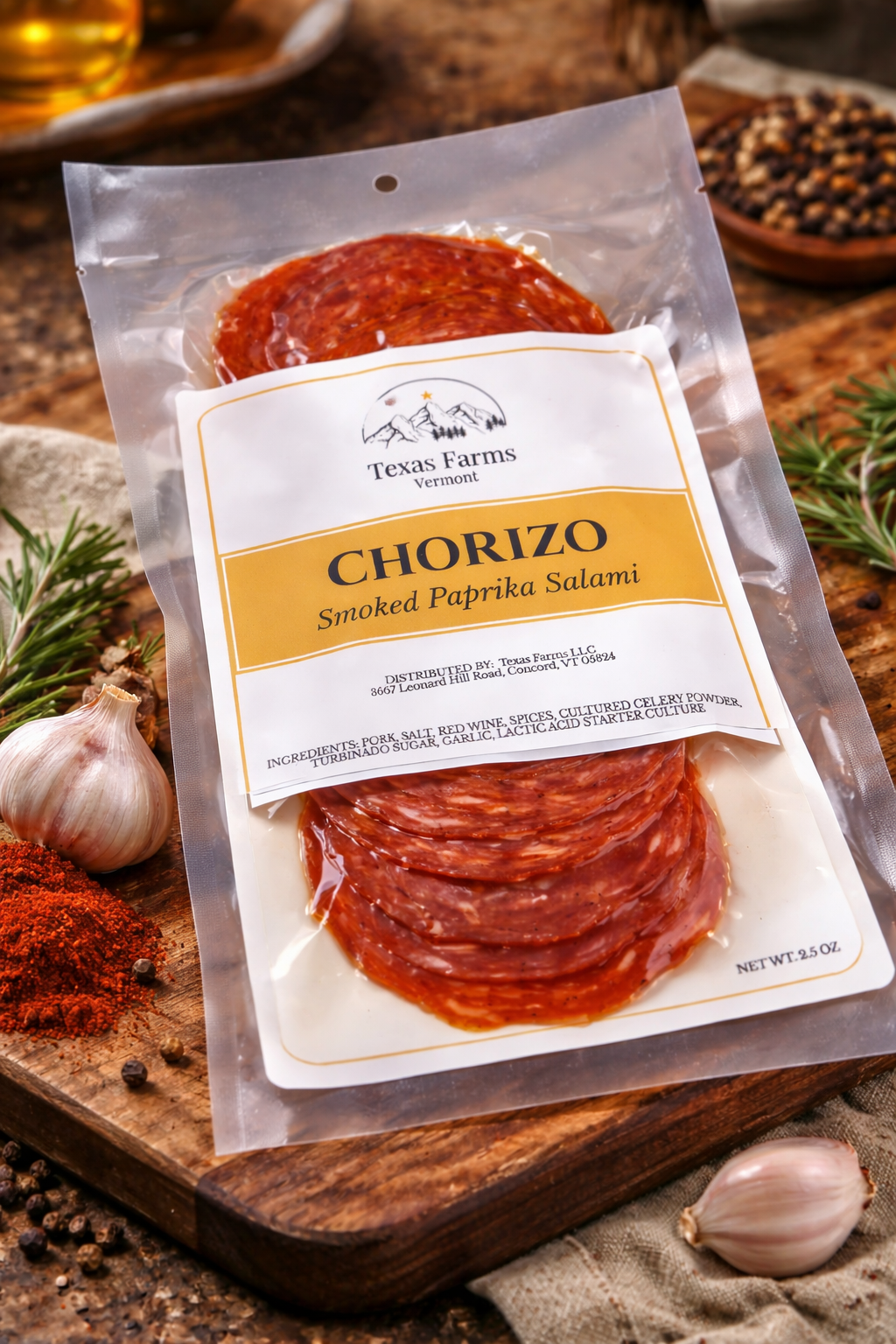
We’ve been raising Gloucestershire Old Spot pigs for years. Every time someone tasted the pork, the conversation eventually drifted to the same place.
“Have you ever thought about making charcuterie?”
The answer was always yes. We’d thought about it constantly. Heritage pork like ours — with its deep marbling and rich, creamy fat — is exactly what traditional charcuterie was built around. Industrial pork can’t do what our pork can do.
But charcuterie is hard. The variables are unforgiving: salt, time, temperature, humidity, cultures. Get any of them wrong and you’ve wasted months. So we kept saying “soon” and kept eating our pork as chops and roasts and bacon.
This year, soon became now.
Why Chorizo
We considered a lot of options for our first cured meat. Coppa, lonza, traditional Italian salami, breakfast-style sausage cured longer. In the end we picked chorizo for a reason that has nothing to do with sophistication.
Chorizo is useful.
It’s not a salami you slice once a year for a fancy charcuterie board (though you can absolutely do that). It’s the kind of thing you keep in the fridge and reach for constantly. Chop it into eggs. Slice it onto pizza. Tuck slivers into a grilled cheese. Roast it with potatoes. It does everything.
We wanted our first charcuterie to be the thing people actually eat, not the thing they save for special occasions.
Smoked Paprika and Red Wine
The two ingredients that define our chorizo style.
Smoked paprika carries the unmistakable flavor of chorizo — that warm, smoky, slightly sweet note that says “this is chorizo” before you even taste the meat. We use a quality smoked paprika because cheap paprika just turns red without adding much flavor.
Red wine deepens everything. It rounds out the spices, adds complexity to the fermentation, and gives the finished salami a slightly fruity note that balances the smoke and heat.
The recipe is simple — pork, salt, red wine, spices, garlic — but each ingredient matters.
What Happens in the Cure
The thing about salami is that it’s not really cooking. It’s fermentation and drying, the same way grandmothers and grandfathers have preserved meat for thousands of years.
Once seasoned and stuffed, the salami hangs in carefully controlled humidity for weeks. The cultures do their work. The texture firms. The flavors concentrate. The fat develops a silky, almost buttery quality.
You can’t rush it. You can only check on it.
What’s Next
Our first batch is here. It’s small — intentionally — because we wanted to be sure of every step before we made more. If this batch sells well (early signs are good), we’ll be making more.
Beyond chorizo, the possibilities are wide open. Coppa from the shoulder. Lonza from the loin. Traditional fennel-and-pepper salami. A long-cure breakfast sausage. There’s a lot of pork and a lot of recipes worth trying.
For now, we have our first salami to enjoy. Years in the making, and finally on the cutting board.