Walk through any grocery store and you’ll see labels everywhere: “natural,” “farm fresh,” “humanely raised.” Most of it is marketing nonsense with no legal definition.
So what does “pasture-raised” actually mean? And why should you care?
The Factory Farm Baseline
To understand pasture-raised, you need to understand what it’s replacing.
The vast majority of pork in America comes from Concentrated Animal Feeding Operations (CAFOs). In these facilities:
- Pigs live their entire lives indoors on concrete
- Breeding sows are confined to gestation crates so small they can’t turn around
- Animals never see sunlight or touch soil
- Growth is maximized through genetics, feed, and pharmaceuticals
- The entire operation is optimized for efficiency, not animal welfare or meat quality
This is how cheap pork happens. It’s also why supermarket pork tastes like nothing.
What Pasture-Raised Means
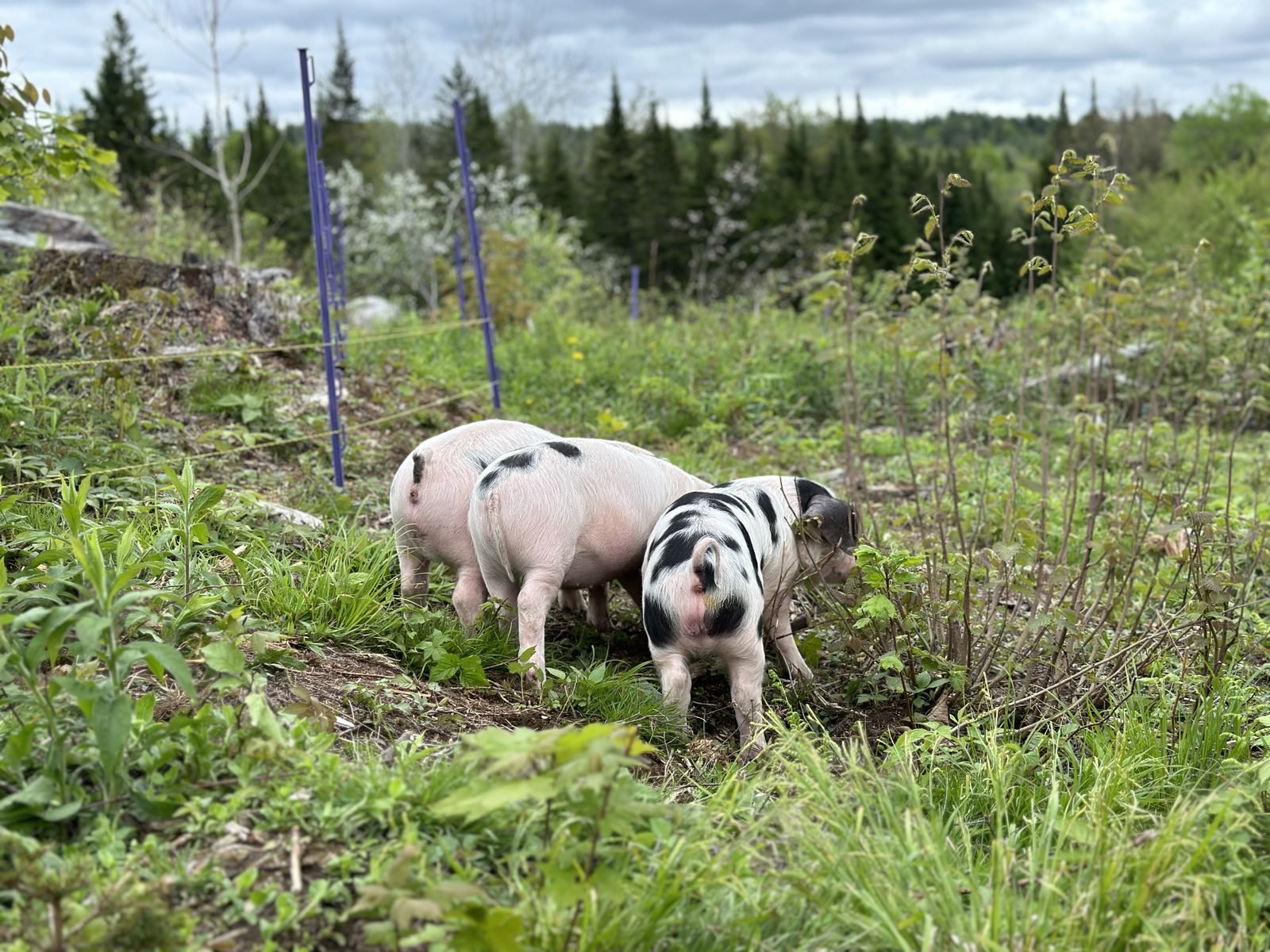
Pasture-raised is the opposite of confinement. On our farm:
- Pigs live outdoors — They have access to pasture, woodland, and open air
- They forage — Roots, grass, acorns, windfall fruit—pigs are omnivores and they eat like it
- They move — Walking, running, rooting, exploring. Pigs are intelligent, curious animals and they need stimulation
- They express natural behaviors — Wallowing in mud, building nests, socializing in groups
- Supplemental feed — We provide grain and other feed to ensure complete nutrition, but it supplements forage rather than replacing it
Why It Matters for Meat Quality
Pasture-raised pork tastes different. Here’s why:
Exercise develops muscle — Pigs that move have more developed muscles with better texture.
Varied diet creates complexity — A pig eating grass, roots, nuts, and grain has meat with more depth of flavor than one eating the same commercial feed every day.
Slower growth concentrates flavor — Our pigs take 8-10 months to reach market weight. Factory pigs are slaughtered at 5-6 months. That extra time means more developed flavor.
Fat composition changes — Pasture-raised pigs have different fatty acid profiles. The fat is often softer, more flavorful, and renders better.
Why It Matters Beyond Taste
Even if you don’t care about flavor, there are other reasons to choose pasture-raised:
Animal welfare — Pigs are smart, social animals. They deserve better than concrete and crates.
Environmental impact — Rotational grazing can improve soil health rather than destroying it.
Supporting small farms — Your money goes to a local family instead of a multinational corporation.
Community connection — You can visit our farm. You can meet your farmer. Try doing that with a factory operation.
The Label Problem
Here’s the catch: “pasture-raised” isn’t a legally regulated term. Anyone can put it on a package.
That’s why relationship matters. Buy from farmers you can talk to. Ask questions. Visit if you can. A real pasture-raised operation will welcome your curiosity. A marketing department won’t.
Want to see how we raise our pigs? We welcome farm visits. Get in touch or learn more about our Gloucestershire Old Spots.