There’s a moment that happens at farmers markets and farm stands that never happens at grocery stores.
A customer picks up a package of pork chops. They ask, “How do you raise your pigs?” And for the next five minutes, we talk. About the breed, the pasture, the feed, the processing. About why we do what we do.
That conversation is why knowing your farmer matters.
The Anonymous Food System
Most food in America travels through an anonymous system. A pork chop at the supermarket might contain meat from dozens of different pigs, from multiple farms, possibly multiple countries, all processed and packaged somewhere you’ll never see.
There’s no one to ask questions. No one accountable for how those animals lived. No face attached to the product.
This anonymity enables a lot of bad behavior. When no one’s watching, corners get cut. When no one’s asking, questions don’t get answered.
What Changes When You Know Your Farmer
When you buy direct from a farm:
Accountability goes up — We can’t hide behind a brand name. Our reputation is personal. If something’s wrong, you know exactly who to talk to.
Transparency becomes possible — Want to visit? Come by. Want to see where the pigs live? We’ll show you. This kind of openness isn’t possible in industrial agriculture.
Feedback loops shorten — You tell us what you like, what you don’t, what you wish we offered. We can actually respond. Try getting Smithfield to adjust their operation based on your preferences.
Money stays local — When you buy from us, that money stays in Vermont. It pays our mortgage, buys feed from local mills, supports local processors. It doesn’t disappear into corporate headquarters in another state.
The Quality Question
Here’s something we’ve noticed: farmers who sell direct tend to produce better products.
Not because we’re better people, but because the incentive structure is different.
When you’re selling to a commodity buyer who pays by the pound, your incentive is volume. Produce as much as possible, as cheaply as possible.
When you’re selling to customers who know your name, your incentive is quality. Repeat business depends on people loving what they bought.
Building Food Security
There’s also a resilience argument. COVID showed how fragile long supply chains can be. Processing plant closures created meat shortages even while farmers had animals ready.
Local food systems are more resilient. When you know your farmer, you have a direct line to food—no supply chain to break.
It’s Also Just Better
Beyond all the practical arguments, there’s something valuable about connection.
Food is important. It’s how we nourish ourselves and our families. It’s the center of how we gather and celebrate.
Knowing where that food comes from, who raised it, how they did it—that adds meaning. It turns eating from consumption into participation.
We love when customers visit. We love talking about our animals, our methods, our failures and successes. That connection is part of why we farm.
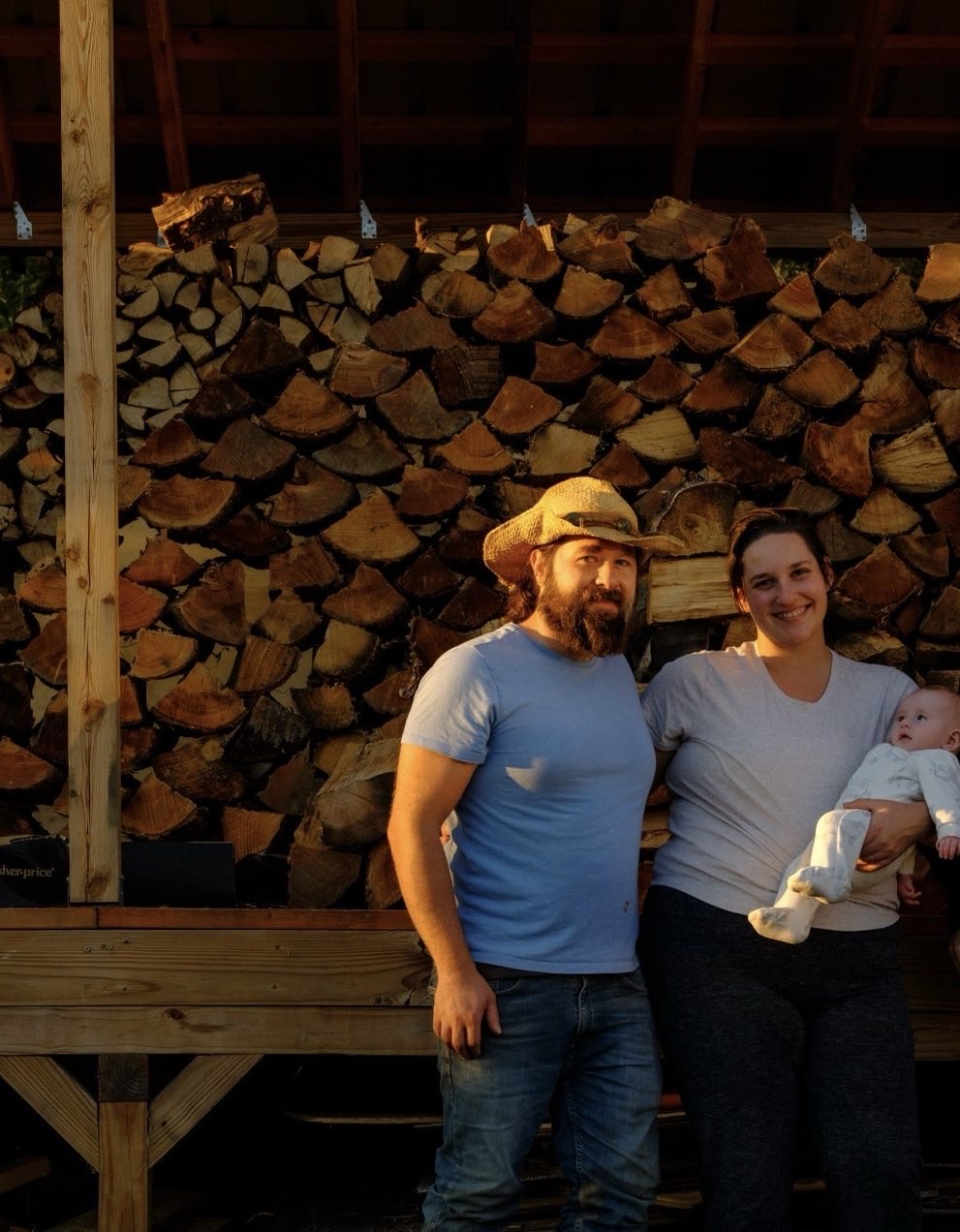
We’re Heather and Alan, and we run Texas Farms Vermont in Concord. Come visit, or learn more about what we raise.